
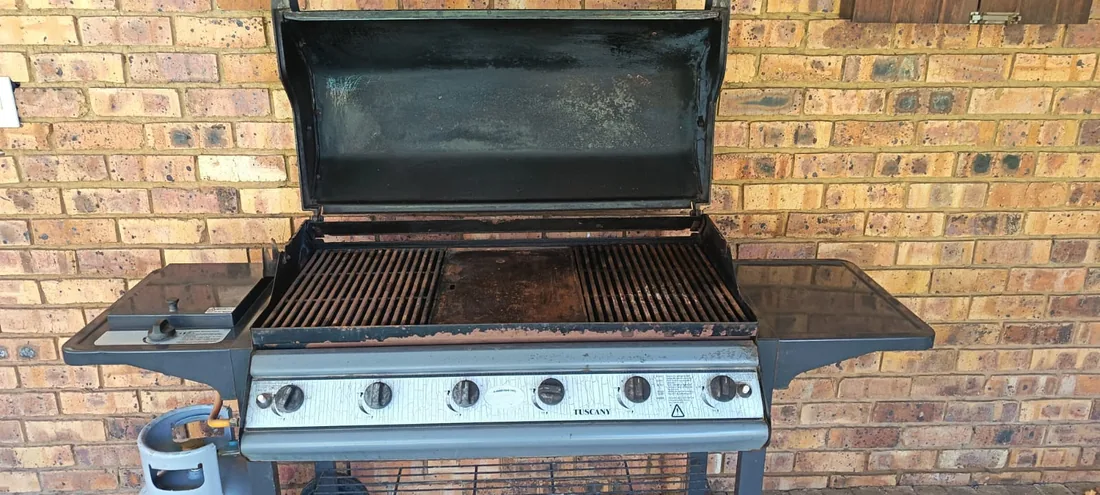
Gas stove and hob repairs: distinguish ignition faults from gas hazards
When a gas hob clicks continuously, one burner will not light or an oven flame keeps going out, the symptoms can involve very different components. In Ballito, we ask about the exact burner, hob or oven function so that the initial enquiry is directed appropriately. A suspected gas leak is not a routine stove repair appointment.
Many modern cookers use electricity for spark ignition, indicators and oven controls while burning LPG for heat. That means a failure to light does not always prove the regulator or gas supply is faulty. Work involving the gas circuit, connections, burners or installation belongs with a gas practitioner registered for the relevant scope.
Understand the common symptoms
Spark is present, but no flame
A wet ignition tip, debris around a burner cap, restricted burner path or gas-flow problem could be responsible. Do not keep clicking if there is a smell of unburned gas.
A single burner burns unevenly
Misaligned removable burner parts after cleaning, worn components or combustion issues can change the flame. Stop using a burner that produces persistent yellow flame, soot or unusual heat.
The burner lights and then cuts out
Some appliances use flame-failure protection. A sensing fault, low flame or an unsuitable condition can trigger shutdown; never defeat the safety feature.
The cooker sparks constantly
Spillage near controls, moisture or an ignition-switch fault may keep the igniter operating. Turn the stove off and arrange a check if the problem persists.
Safe observations that help explain the fault
- Record which burner is affected and whether the other burners work normally; avoid repeated lighting attempts.
- If the appliance is cold, switched off and there is no gas smell, note whether removable caps appear displaced after cleaning; do not open gas fittings.
- Photograph the model label and any error display, without touching electrical or gas connections.
- Stop use and move away if there is a gas smell, soot, abnormal flame behaviour or a hot electrical smell.
What a stove assessment may involve
Ignition and control checks
The assessor will separate electronic spark components and controls from the burner and gas system. Exact testing depends on whether the cooker is freestanding, built-in or a combination electric/gas model.
Burner and flame-safety assessment
A qualified gas practitioner may need to assess burner alignment, flame supervision, ventilation and the quality of combustion before the stove is returned to service.
Repair, parts and final verification
Model-specific electrodes, switches or safety components may be required. A successful flame by itself is not proof that all safety requirements have been met.
Repair or replace?
For an otherwise sound hob, a replaceable ignition switch or control part can be economical. Extensive corrosion, a damaged cooking surface, obsolete safety parts or an unsafe installation can change the recommendation. Consider the age, parts supply, condition of the gas system and the cost of bringing it into safe operation.
What affects the repair cost?
The scope changes the price: a localised control issue is not the same job as a supply, ventilation or gas-system defect. Built-in hobs and mixed-fuel cookers can need additional access. The quote should distinguish fault testing, parts, labour and any required gas compliance checks. Read our call-out fee guidance for booking questions.
Share the model and symptoms; appointment and scope are confirmed directly.
Information to include with your enquiry
Provide a photograph of the hob or cooker model plate, say which burner or oven setting fails, describe the spark and flame behaviour, and include the installation address. Tell us whether access is through a managed estate or rented property.
Local enquiries from Ballito and nearby areas
We receive service enquiries from Ballito, Salt Rock, Shaka’s Rock, Sheffield Beach, Simbithi, Zimbali and Umhlali. Provide the exact suburb and any estate access rules so coverage and availability can be checked for the specific job. Visit the service-area directory for more local information.
Related repair services and guidance
For general safety guidance, see LPGSA safe-use tips. These references do not verify our company’s credentials.
Frequently asked questions
Why does my gas hob keep clicking?
Spillage, damp components or a defective ignition switch can keep the spark circuit active. Seek assessment rather than repeatedly operating the appliance.
Why does a burner ignite but not stay alight?
Flame-failure sensing, burner conditions or gas supply issues may be involved. Safety components must never be bypassed.
Is a yellow flame normal?
Flame appearance depends on design, but persistent yellow flame with soot is a concern. Stop using the burner and seek a registered practitioner’s advice.
Can I replace a gas regulator myself?
Do not modify gas connections or regulators unless you are appropriately authorised and trained. Regulated work requires the correct practitioner and checks.
Do you repair built-in hobs?
Send the brand and model to confirm scope and appropriate practitioner availability; some built-in models require special access.
Can cleaning solve an ignition problem?
Cleaning removable surface parts according to the manual can help with minor spill contamination, but it is not a substitute for qualified inspection of a recurring fault.
What if gas is smelt when the knob is off?
Treat it as a suspected leak. Leave the area and contact emergency services or the gas supplier from a safe place.
Can I request an estimate before visiting?
Describe the model and symptoms. A preliminary discussion may be possible, but a dependable quotation depends on diagnosis.